Advertorial
.avif)
If you have nerve damage — your nail fungus may be advancing silently while you feel nothing. Here's what to do before it becomes untreatable.
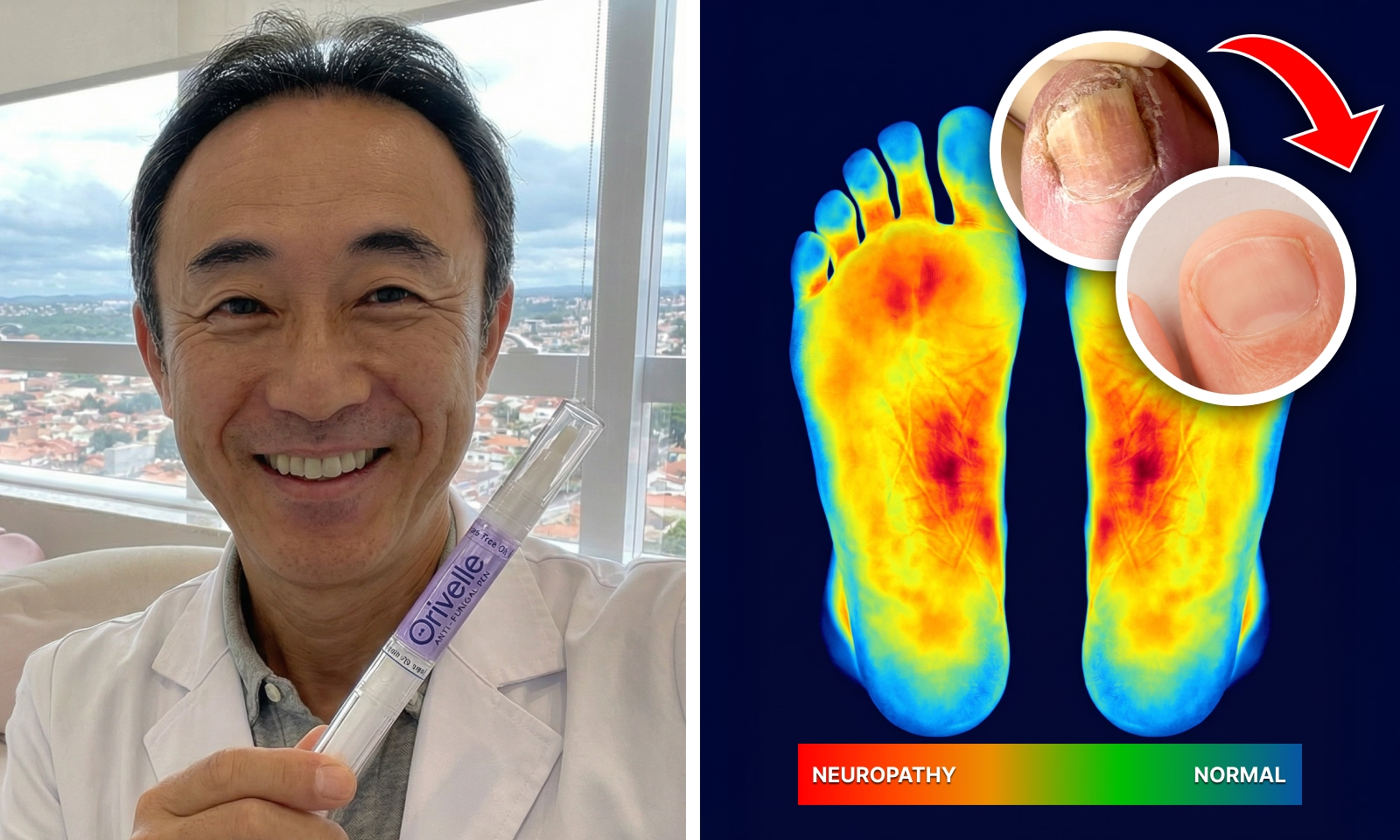
Most people with neuropathy already know their feet can't fully be trusted to report pain.
What they don't know is that the same nerve damage blocking those pain signals is also blocking one of the earliest warnings that nail fungus is starting.
By the time you see it — the yellowing, the thickening, the crumbling edges — the infection has often been silently established for months.
In my practice, I see one pattern in patients with severe nail fungus that most doctors never flag explicitly.
Almost all of them have some form of reduced nerve sensitivity in their feet.
It makes sense when you understand the biology. Healthy toenails give off early signals when a fungal infection begins — a subtle change in sensitivity, a faint awareness around the nail bed. Not pain. Just a signal.
In people with peripheral neuropathy, that signal is muted. Sometimes it's gone entirely.
The fungus spreads through the nail bed. Deeper and deeper. While your feet report nothing unusual. Weeks pass. Months pass.
By the time the visual signs appear — the discoloration, the texture change, the edges that begin to flake — the infection has had significant time to establish itself.
"I call this the Silent Progression," I explain to patients. "In people with nerve damage, nail fungus isn't just more common — it's significantly harder to catch early, and significantly harder to address once it's established. The normal alarm system that alerts most people has been disconnected."
The standard response to a problem nail is antifungal cream. Apply it directly. Wait for it to work.
Here's the problem.
The nail itself is a dense, keratinized barrier. Most topical creams cannot penetrate it deeply enough to reach the nail bed — the living tissue where fungus actually lives and spreads. They suppress the surface. They don't reach the root.
"Think of it like cutting a weed at the soil line," I tell patients. "The top disappears. But the root system is still alive underneath. And with neuropathy, you won't feel it when it starts growing back."
For someone without neuropathy, this cycle is frustrating. For someone with nerve damage, it's worse — the cream appears to work, you stop applying it, the root regrows, the visible infection returns. And the whole time, your feet don't tell you it's happening.
Some topical creams also dry out the nail bed, making the barrier more porous. Instead of protecting the nail, they can create more pathways for fungus to exploit.
Several years ago, I began researching botanical compounds that penetrate the nail plate differently than synthetic antifungals.
The key insight came from studying how certain plant-derived oils interact with keratin — the protein structure of the nail. Lipophilic plant extracts like tea tree, jojoba, and evening primrose have a molecular structure that allows them to pass through the nail plate, rather than sitting on top of it.
This means the active compounds may reach the nail bed — where fungus is actually taking root.
Research published in Health News found that 82% of persistent nail fungus cases involve colonies at the nail bed level, beyond the reach of standard topical applications.*
.avif)
I developed what I now call the Deep Root Protocol — a precision blend of 14 botanical extracts formulated to penetrate rather than coat.
The goal is restoration from the inside out. Not surface suppression — genuine root-level support, giving the nail the tools it needs to defend itself even when nerve signals are compromised.
.avif)
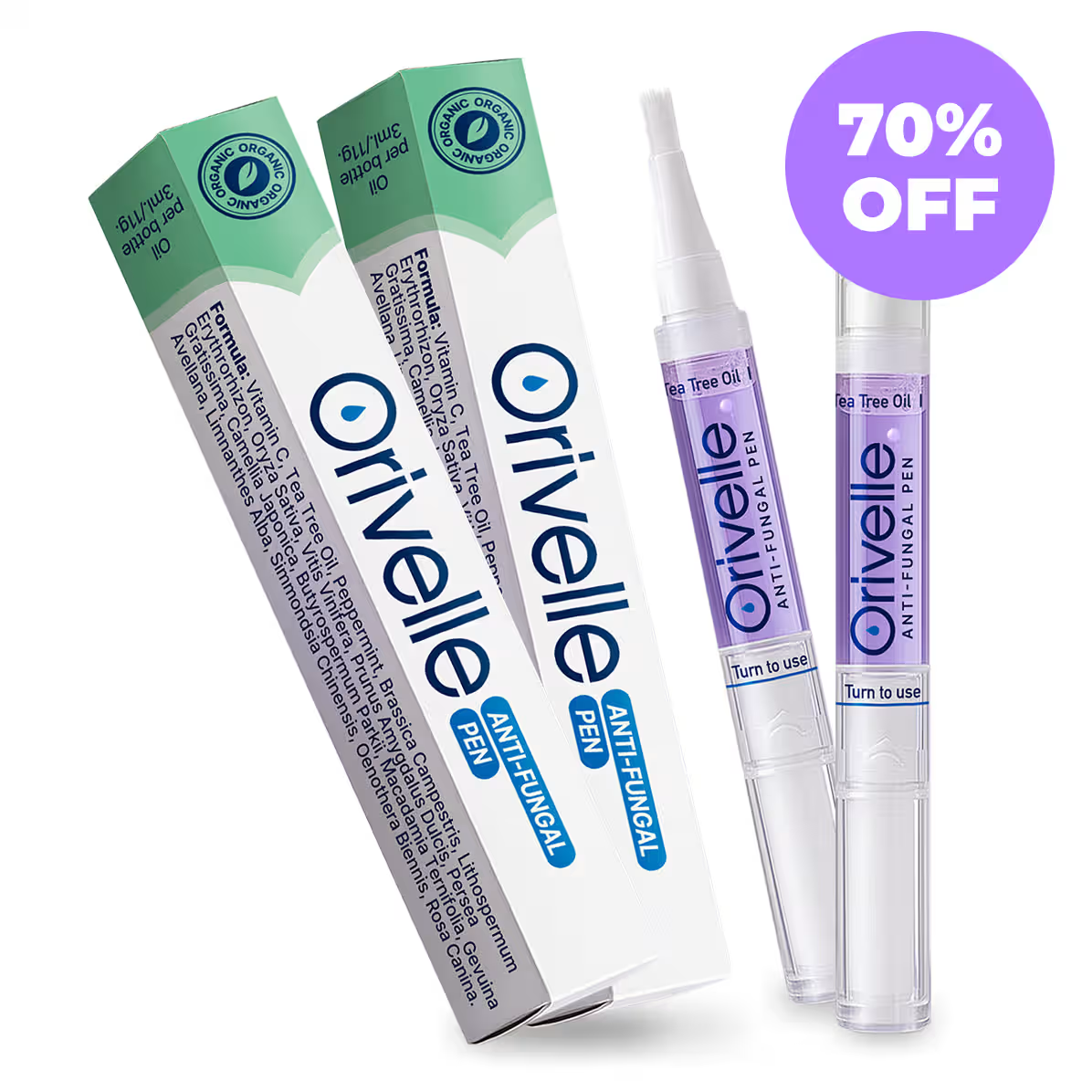
The delivery mechanism matters too. Orivelle's precision pen format concentrates the formula exactly at the nail surface and the groove where the nail meets the skin. No spreading across surrounding tissue. No dilution. The full concentration of botanicals goes where penetration needs to happen.
For people with neuropathy, that precision isn't just convenient — it ensures consistent, accurate application even without tactile feedback guiding placement.
"After less than 2 weeks of use, I noticed improvements on my discolored nails. Less yellowish/brownish, thickness lessened and nails looked healthier. I have never experienced it with other OTC nail treatments."
Robert S. ⭐⭐⭐⭐⭐
"I've wasted money on creams before, but the Orivelle pen is different. It's easy to use and my nails are finally looking clear again."
Linda R. ⭐⭐⭐⭐⭐
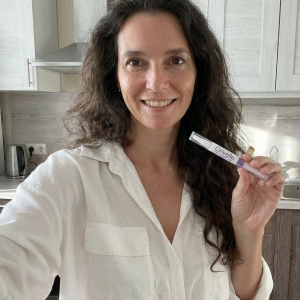
"First noticed nail colour clearing up, nails stopped flaking and visible fungal reduction on the under nail bed. Extremely happy with this easy to use product."
Michelle C. ⭐⭐⭐⭐⭐
Michelle's observation — "visible fungal reduction under nail bed" — is the clinical marker I look for. Surface appearance can be misleading. Improvement at the nail bed level indicates the formula is reaching the root.
For patients managing neuropathy alongside nail fungus, I recommend treating nail checks as a visual practice — not a sensory one.
You cannot rely on discomfort to alert you. Weekly visual checks, in good light, are essential:
These are the warning signals your nerve endings may not be sending.
Act at the first visual sign — not when the nail is fully compromised. The longer a fungal infection has to establish itself at the nail bed, the deeper the restoration work required.
.avif)
"The people who respond best are the ones who catch it early," I tell patients. "And for people with neuropathy, that means making a visual habit. Not waiting to feel it — because that signal may not come."
Orivelle isn't sold in pharmacies or on Amazon. It's available exclusively through the official website — this protects formula consistency and eliminates counterfeit versions, which are already circulating online.
First-time customers currently qualify for a significant discount. Given recent demand, this pricing may not stay in place indefinitely.
30-day money-back guarantee. If you don’t like it, you get full refund, no questions asked.
.avif)
Step 1: Visit the official Orivelle website via the link above.
Step 2: Select your package (multi-pen sets offer the best value for full treatment cycles).
Step 3: Apply once daily to each affected nail using the precision tip applicator.